Spray Coating Technology
Spray coating technology is a valuable alternative resist deposition technique, which overcomes limitations of conventional spin coating technology.
Introduction
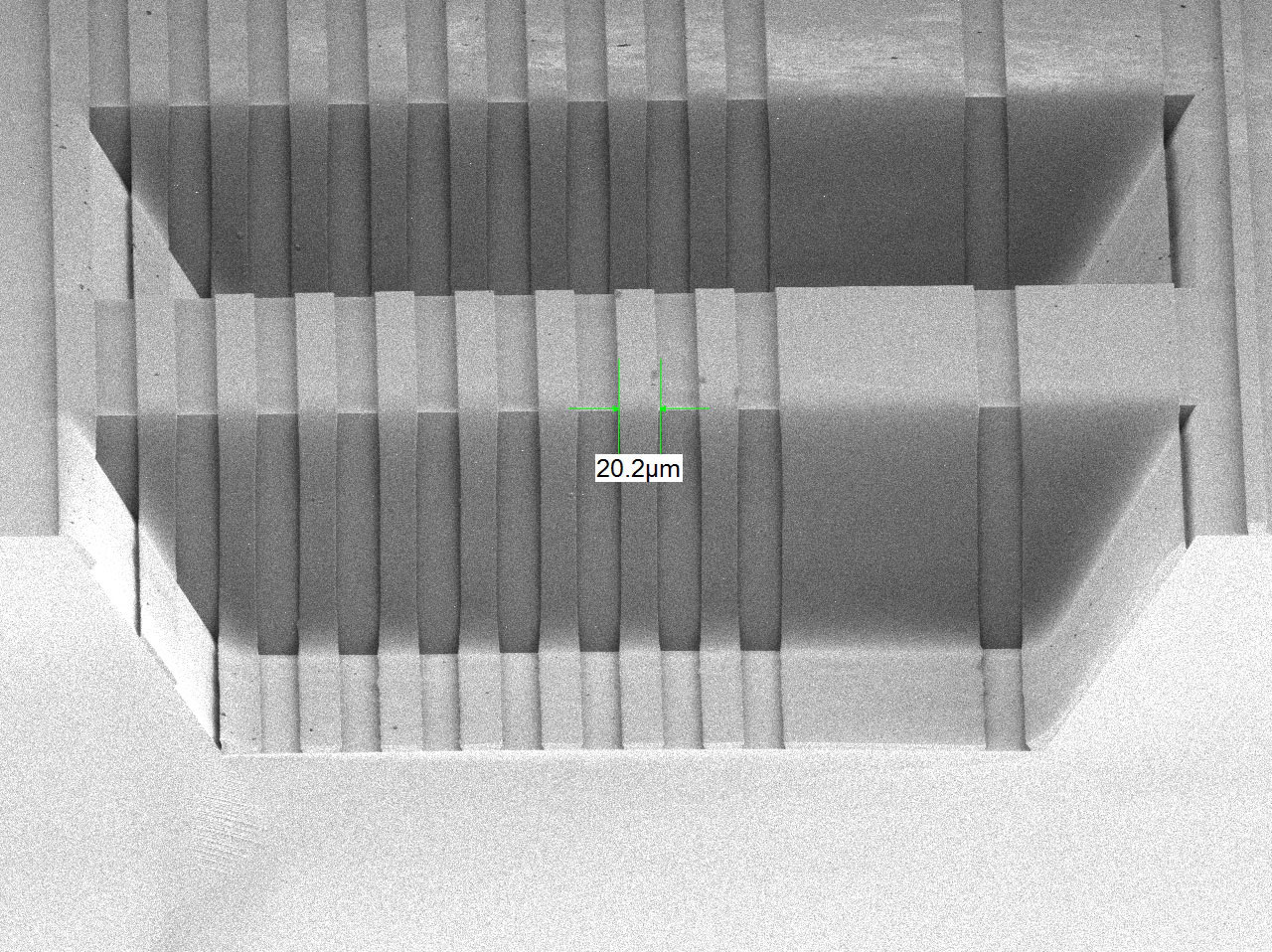
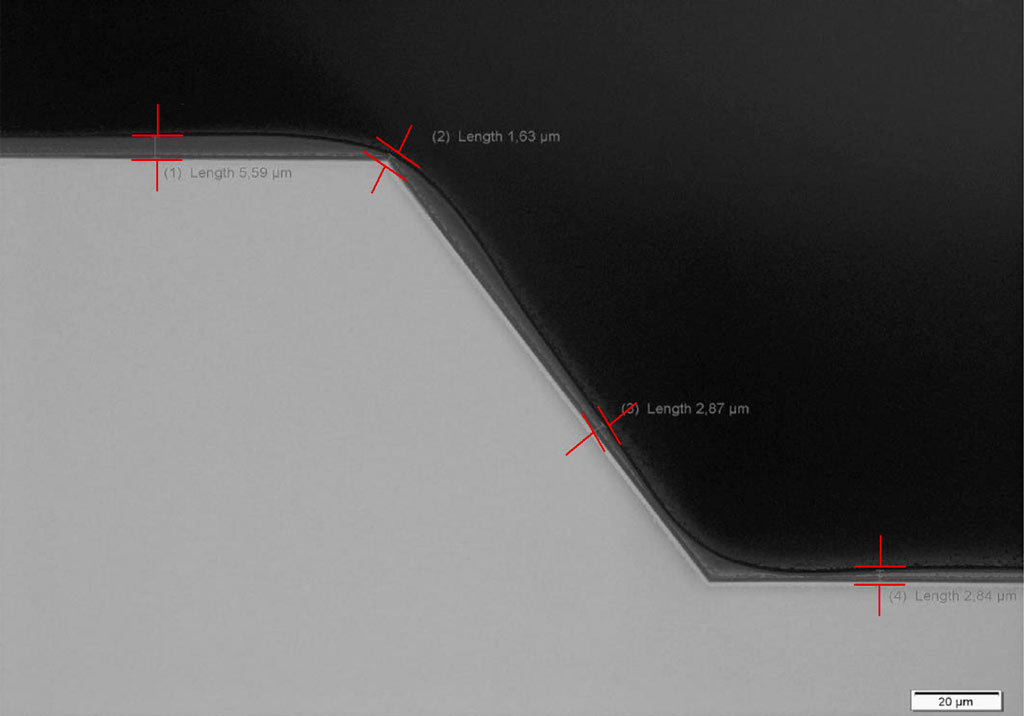
Spray coating technology provides several benefits and allows the ability to overcome remaining drawbacks of spin coating such as low material consumption, but more importantly can provide uniform coatings on non-planar surfaces or even inside the cavities, vias or trenches.
Related technologies
Although spin coating is still a preferred method of resist processing and a well-understood technology, this process has fundamental limitations with respect to device topography, material consumption, and oversized and fragile substrates. However, many applications often exhibit high topography variations. The surface planarity of the coated material significantly impacts further processes. For example, patterning on high-topography wafers, LIGA (lithography, electroforming, and molding), temporary bonding, nanoimprint lithography (NIL) and adhesive bonding rely on advanced coating capabilities and process excellence. Combining numerous requirements such as ultra-thin film thickness or flat surface – especially inside the cavities or vias – upsurges the process control complexity. Proprietary OmniSpray technology can fulfill such challenging requirements by providing excellent uniformity results. Its pressure-less ultrasonic atomization of the resist material guarantees precisely controlled droplet size and its narrow spectral distribution independent from N2 flow. Fully recipe-controlled spray nozzle parameters and x/y meander movement provide high flexibility and repeatability of the spray coating process. The optionally available heated chuck system can further extend the application range. Furthermore, NanoSpray/NanoFill technologies belong to other important advancements by EV Group. The patented multi-step NanoSpray process is a unique coating technique under vacuum conditions, enabling uniform resist coverage of a variety of via geometries and sidewalls for high aspect TSVs with ratio of up to 1:20. NanoFill technology allows complete, void-free filling of vias with flat surfaces. These novel coating processes enable applications like in-via lithography, fast and cost-efficient deposition of organic low-k dielectrics, and easy-to-remove in-via protective coatings. Moreover, EVG’s process technology excellence includes an extensive range of materials such as positive and negative resists, polyimides, double-sided coating of thin-resist layers, high-viscosity resists or resins containing nanoparticles, and is thus able to fulfill advanced process parameters challenged by current market demands.
Features
- Precise recipe-controlled resist dispensing process
- Pressure-less ultrasonic atomization of the resist material guarantees precisely controlled droplet size independent to N2 flow
- Narrow spectral droplet distribution
- Extensive range of photoresists with viscosities up to 52000 cP
- OmniSpray® advanced process control guaranteeing conformal resist coverage of a variety of via geometries, edge coverage and sidewalls for high aspect TSVs
- Optional NanoSpray™ module achieves conformal coating of 300µm deep patterns with aspect ratios up to 1:10 and vertical sidewalls
- Fragile, thin or warped wafer handling of multiple wafer sizes
- Process technology excellence and development service
- Smart process control and data analysis software features
- Integrated analysis features for process and machine control
- Parallel task/queueing task processing feature
- Equipment and process performance tracking feature
- Smart handling features
- Occurrences and alarms analysis
- Smart maintenance management and tracking

Talk to our EVG technology experts!
Questions?
Events
SEMICON EUROPA 2026
Treffen Sie das EVG-Team am Stand #B1241 und besuchen Sie unsere Poster-Präsentationen auf der APC:
"Software-Driven Strategies for Advanced Multi-Die Patterning in Digital Lithography" von Business Development Manager Dr. Ksenija Varga und “Leveraging Advanced Bonding Technologies to Enable Scalable Co-Packaged Optics Architectures” von Business Development Manager Elisabeth Brandl.
Hier finden Sie nähere Infos zum Program.
Industrial Print Integration Conference (IPI) 2026
Hören Sie sich unsere Keynote an: “Advancing AR/VR and CPO: EV Group’s Inkjet Solutions for Next-Generation Optics” gehalten vonJohanna Rimböck (Technology Development).
Mehr Informationen zum Programm finden Sie hier.
EPTC 2026
Besuchen Sie unseren Stand #2 & hören Sie sich unsere Vorträge an:
"Scalable Manufacturing Approaches for Co-Packaged Optics via NIL and Advanced Wafer Bonding" gehalten von Director Business Development Dr. Bernd Dielacher und
“Advancing 310×310 mm² Panel Level Packaging: High Throughput Pathways to High Yield 3D Integration” und “Plasma–Enabled Die Singulation on Film Frame Carrier for Advanced HBM and Logic Die Integration” von Business Development Manager Dr. Ksenija Varga.
“Hybrid Bonding Overlay Reduction Through Lithographic Pre-Compensation of the Residual Fingerprint” von Technical Program Manager Sander Grosemans.
Mehr Infos zum Programm hier.
Questions about our technologies?
Contact the EVG experts